

UPLIDA INSIGHTS
Operational thinking for growing B2B organizations.
Practical perspectives on execution infrastructure, operational visibility, GTM systems, customer operations, and AI readiness.
INSIGHT 01
Why operationalization is the missing layer in growth
Most organizations do not fail from lack of strategy. They struggle when complexity outpaces execution discipline.
Read insightINSIGHT 02
AI readiness starts with operational maturity
Automation only works when workflows, data, ownership, and decision logic are clear.
Read insightINSIGHT 03
The execution gap between product and revenue
Growth depends on the operating layer that connects product, GTM, customer operations, and finance.
Read insightLatest Insights
Explore insights by topic to find practical guidance on growth systems, operations, customer experience, and AI readiness.
Topics
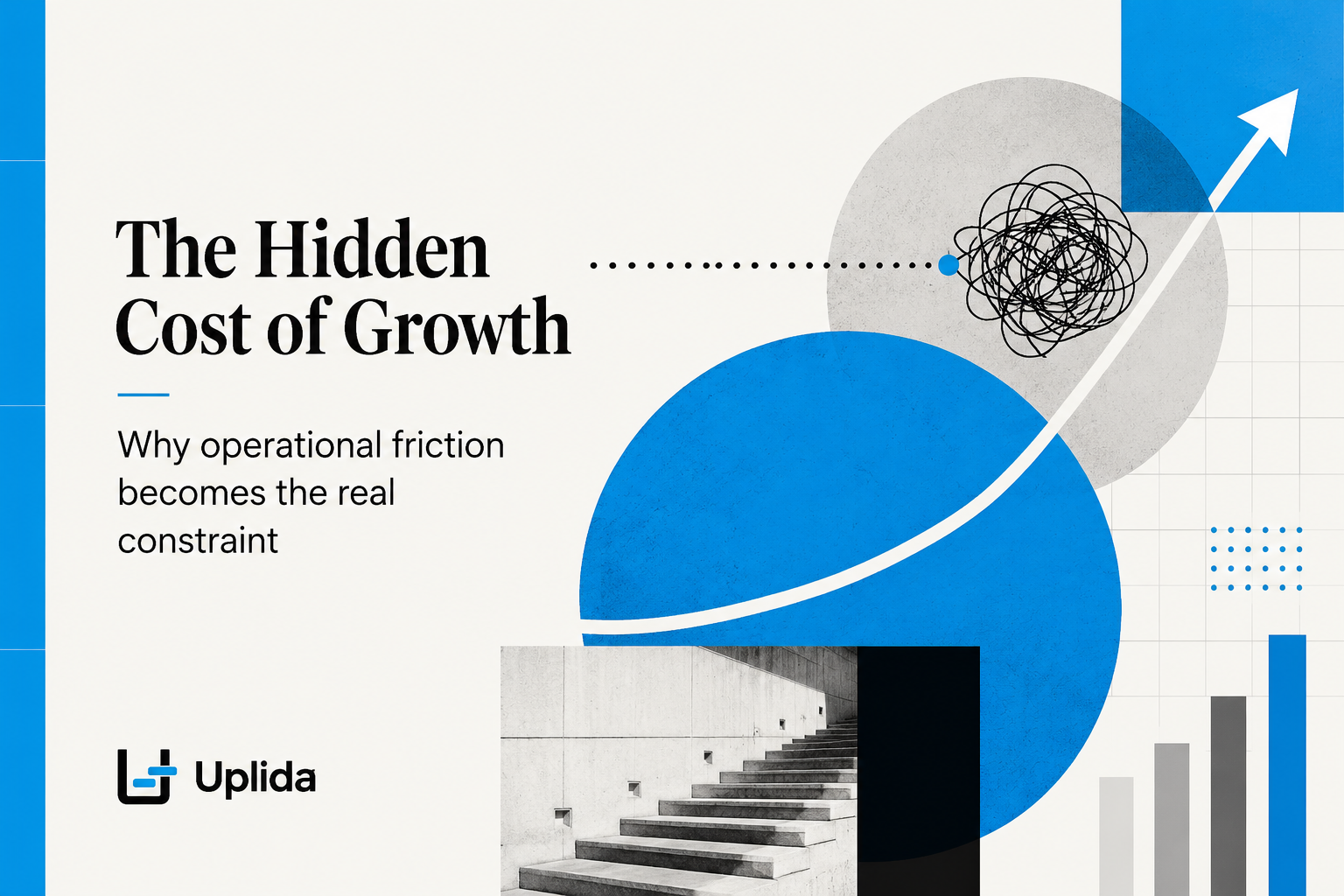
The Hidden Cost of Growth: Why Operational Friction Becomes the Real Constraint
The Four Sources of Growth Friction
While operational friction can appear in many forms, most organizations encounter four recurring sources of growth constraints.
1. Ownership Ambiguity
Teams are unclear about who owns decisions, outcomes, or customer experiences. Work stalls because accountability is distributed but responsibility is not.
2. Workflow Inconsistency
Processes exist, but they are executed differently across teams, departments, or locations. Success becomes dependent on individual effort rather than repeatable systems.
3. Visibility Gaps
Leaders receive information but struggle to gain clarity. Reports are fragmented, metrics are disconnected, and decision-making slows as confidence in the data declines.
4. Technology-Process Misalignment
Organizations expect technology to solve problems that originate in process design. Systems become repositories of operational issues rather than enablers of operational excellence.
Most operational challenges can be traced to one or more of these four areas. Understanding where friction originates is the first step toward addressing it.
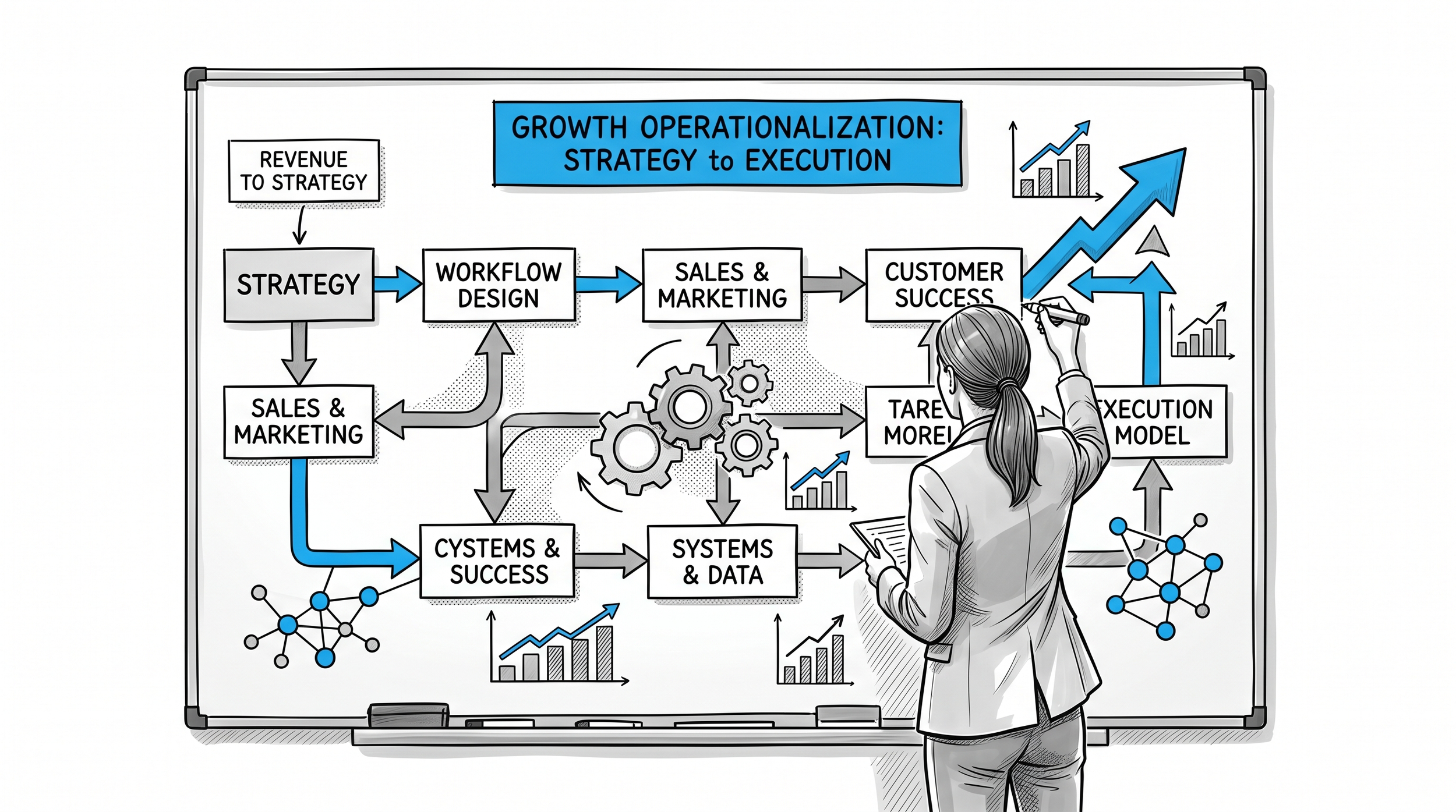
Why operationalization is the missing layer in growth.
Growth does not usually break because the strategy is wrong. It breaks when complexity outpaces the systems, workflows, ownership, and visibility needed to execute consistently.