

REVENUE & GTM EXECUTION SYSTEMS
Build the operating system behind revenue execution.
Uplida helps growing B2B organizations strengthen CRM discipline, pipeline visibility, forecasting confidence, sales process adoption, and GTM execution systems.

WHERE REVENUE EXECUTION BREAKS DOWN
Revenue growth exposes operating discipline gaps.
Most revenue problems are not caused by a lack of activity. They show up when CRM usage, pipeline management, forecasting, handoffs, and sales process discipline are not strong enough to support growth. Teams stay busy, but leadership cannot fully trust the visibility behind the motion.
01
CRM inconsistency
Teams use the CRM differently, making pipeline, activity, and customer data hard to trust.
02
Pipeline visibility gaps
Leadership cannot clearly see deal quality, risk, timing, handoffs, or what needs attention.
03
Forecasting uncertainty
Forecasts depend too heavily on interpretation, manual updates, or inconsistent deal-stage discipline.
04
Sales process drift
The process exists, but adoption varies across people, teams, territories, or business units.
05
GTM handoff friction
Marketing, sales, RevOps, customer operations, and finance are not operating from the same execution model.
THE REVENUE EXECUTION LAYER
The missing layer is operating discipline.
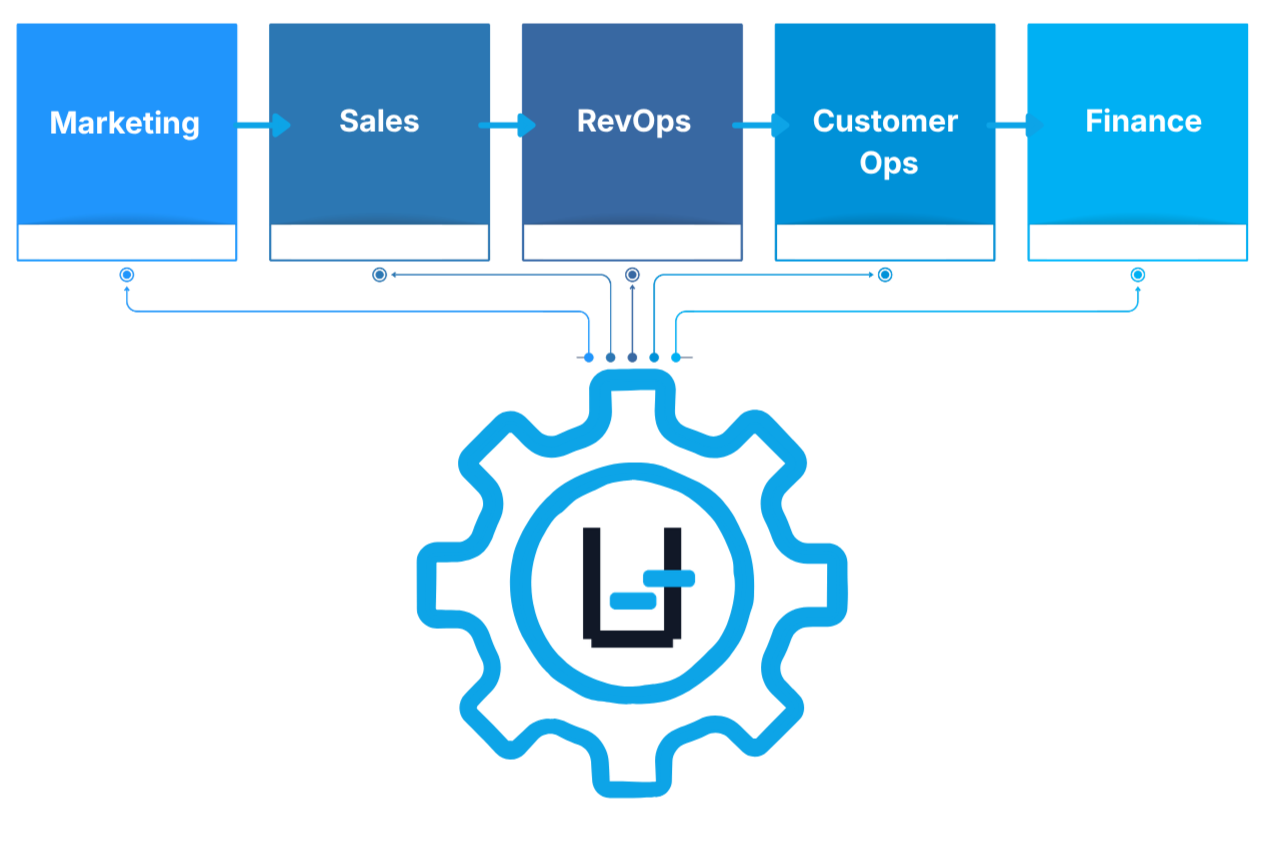
Revenue Execution Layer
Shared stage definitions and sales process expectations
CRM structure that matches how revenue work actually moves
Pipeline and forecasting rhythms that leadership can trust
Clear ownership across GTM, RevOps, customer operations, and finance
Reporting that shows execution health, not just activity
Revenue systems work when the operating model behind them is clear. CRM, pipeline, forecasting, enablement, and reporting all depend on shared definitions, reliable workflows, clear ownership, and consistent execution habits.
REVENUE EXECUTION STACK
What we build
Execution systems that improve CRM discipline, pipeline visibility, forecasting confidence, and GTM operating rhythm.
CRM governance and adoption
Define the rules, fields, workflows, and usage standards that make CRM data more reliable.
Pipeline visibility design
Create pipeline structures and reporting views that show deal quality, timing, risk, and next actions.
Forecasting workflow improvement
Build forecasting rhythms, inputs, definitions, and review processes that improve leadership confidence.
Sales process operationalization
Translate sales process expectations into workflows, CRM stages, enablement, and accountability.
GTM handoff alignment
Clarify how marketing, sales, RevOps, customer operations, and finance coordinate across the customer journey.
Revenue performance dashboards
Build reporting that connects activity, pipeline, customer signals, capacity, and commercial performance.
Outcomes that show up in execution
Stronger CRM adoption
Improve data quality, usage consistency, governance, and process discipline across revenue teams.
Better pipeline visibility
Give leadership a clearer view of deal movement, risk, timing, and sales execution quality.
More confident forecasting
Create a more reliable forecasting rhythm grounded in shared definitions and consistent inputs.
Less revenue execution drag
Reduce manual follow-up, side-channel coordination, and unclear ownership across the GTM motion.
Best fit for this work
Revenue leaders
You need better visibility into pipeline quality, forecast confidence, sales execution, and team accountability.
RevOps and sales operations teams
You need stronger CRM governance, process discipline, workflow structure, and reporting consistency.
Founder-led B2B companies
Your sales motion is growing, but informal systems are starting to create visibility and execution gaps.
GTM and customer-facing teams
You need better alignment across marketing, sales, customer operations, finance, and leadership reporting.
HOW WE WORK
Embedded revenue execution support
We work inside the revenue operating rhythm to improve the systems, workflows, reporting, and adoption habits that support GTM execution.
Diagnose
Assess CRM usage, pipeline visibility, forecasting discipline, sales process adoption, and GTM handoffs.
Align
Clarify definitions, ownership, operating rhythms, and decision points across revenue and customer-facing teams.
Operationalize
Build workflows, CRM structures, dashboards, handoff processes, and adoption routines.
Instrument
Create visibility through reporting, pipeline signals, forecasting views, and performance dashboards.
Scale
Reinforce adoption, refine operating cadence, and expand what works across teams or business units.
Best fit for this work
Revenue leaders
You need better visibility into pipeline quality, forecast confidence, sales execution, and team accountability.
RevOps and sales operations teams
You need stronger CRM governance, process discipline, workflow structure, and reporting consistency.
Founder-led B2B companies
Your sales motion is growing, but informal systems are starting to create visibility and execution gaps.
GTM and customer-facing teams
You need better alignment across marketing, sales, customer operations, finance, and leadership reporting.
REPRESENTATIVE RESULTS
Execution experience behind revenue systems.
Anonymized proof snapshots based on operating leadership and execution work across GTM systems, CRM governance, pipeline visibility, and forecasting discipline.
GTM EXECUTION INFRASTRUCTURE
Global GTM operations support model
Built and scaled a GTM operations support model across research, intelligence, content, design, CRM, pursuit management, and commercial operating cadence.
CRM & SALES EXECUTION
CRM governance and territory optimization
Restructured territory alignment and CRM operating structure to improve sales execution, customer-facing activity, and commercial clarity.
FORECASTING VISIBILITY
Forecasting visibility improvement
Built a structured forecasting model using historical sales data and market trends to improve commercial planning and operational visibility.
Build the system behind revenue execution.