

AI READINESS
Prepare the operating system before you automate the work.
Uplida helps growing B2B organizations prepare workflows, data, ownership, systems, and operating rhythms for practical AI adoption.

WHERE AI GETS STUCK
AI exposes operational immaturity.
Most AI initiatives do not fail because the technology is weak. They fail because the work underneath is unclear. Workflows are inconsistent, data is unreliable, ownership is fragmented, and teams are not aligned on how automation should support execution.
01
Workflow ambiguity
Teams want automation, but the process itself is not clearly defined.
02
Data inconsistency
AI outputs are only as reliable as the data, definitions, and systems feeding them.
03
Ownership gaps
No one clearly owns the workflow, decision logic, review process, or adoption path.
04
Tool-first decisions
Technology is selected before the organization understands where AI can create real leverage.
05
Adoption resistance
Teams do not trust or use AI-enabled workflows when the operating rhythm is unclear.
THE AI-READY OPERATING LAYER
The missing layer is workflow maturity.
AI works best when the work is already clear. Before automation can improve execution, the organization needs defined workflows, reliable data, accountable owners, and systems that reflect how the business actually runs.
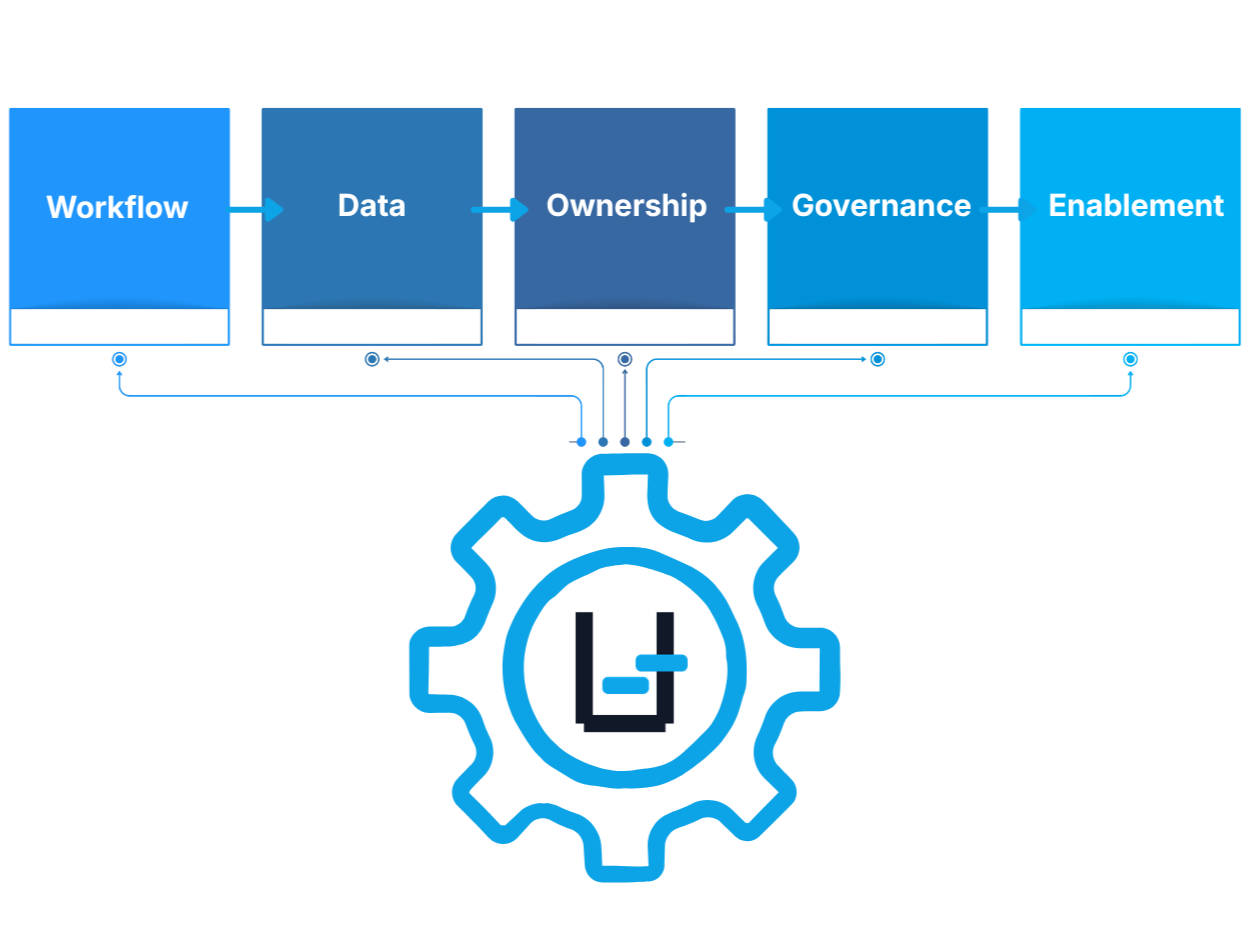
AI-Readiness Operating Layer
Clear workflows before automation
Reliable data and shared definitions
Ownership for decisions, outputs, and adoption
Systems that support how teams actually work
Governance that keeps AI-enabled workflows useful
AI READINESS STACK
What we prepare
Operational maturity, workflow clarity, and adoption systems that make AI useful inside the business.
Workflow maturity assessment
Evaluate whether key workflows are clear, consistent, and ready for AI-enabled support.
Automation opportunity mapping
Identify where AI can reduce manual work, improve speed, or strengthen visibility without creating more complexity.
Data and process cleanup
Clarify definitions, required fields, system usage, and process standards before automation.
Ownership and governance design
Define who owns workflows, outputs, review processes, exceptions, and ongoing improvement.
AI-enabled workflow design
Translate practical AI use cases into operating workflows teams can follow and adopt.
Team enablement and adoption
Train teams, clarify expectations, and embed AI-enabled workflows into the operating rhythm.
Outcomes that show up in execution
Clearer AI priorities
Move from scattered tool exploration to focused use cases tied to business execution.
Cleaner workflow foundations
Prepare processes, ownership, and data before automation is introduced.
Better adoption
Help teams understand how AI fits into the way work actually gets done.
Reduced automation noise
Avoid adding tools that create more fragmentation, rework, or operational confusion.
AI does not fix unclear work. It accelerates the operating system already in place.
The strongest AI initiatives start with workflow clarity, data discipline, ownership, governance, and team adoption.
HOW WE WORK
AI readiness roadmap
We help teams move from scattered AI exploration to practical workflow enablement by clarifying the work, preparing the operating layer, and building adoption paths teams can actually use.
Diagnose
Assess workflow maturity, data consistency, ownership gaps, system usage, and adoption risks before automation is introduced.
Align
Clarify priority workflows, business use cases, ownership, governance needs, review steps, and decision logic.
Map
Identify where AI can reduce manual work, improve speed, strengthen visibility, or support better execution without adding complexity.
Operationalize
Build AI-enabled workflows, process guidance, review paths, guardrails, reporting needs, and practical operating routines.
Enable
Train teams, clarify expectations, reinforce adoption, and refine workflows based on usage, performance, and team feedback.
Where this work shows up
AI readiness diagnostic
A company wants to use AI but needs to understand whether workflows, data, ownership, and systems are ready.
Workflow automation preparation
Teams are spending too much time on manual work, but the current process needs to be clarified before automation.
Customer operations AI enablement
Support, onboarding, service delivery, or renewals could benefit from AI, but knowledge, escalation, and workflow structure need improvement first.
CRM and GTM AI readiness
Revenue teams want AI-assisted follow-up, pipeline visibility, forecasting, or customer insights, but CRM discipline and process consistency are not strong enough.
Internal knowledge and enablement systems
Teams need better access to internal knowledge, process guidance, content, or decision support before AI can be useful.
Best fit for this work
Founder-led companies exploring AI
You know AI matters, but need a practical path that does not create more operational noise.
Customer operations leaders
You want better support, onboarding, knowledge systems, escalation, or service visibility.
Revenue and GTM teams
You want AI to improve CRM discipline, follow-up, reporting, pipeline visibility, or sales enablement.
Operations and leadership teams
You need workflow maturity, ownership, governance, and adoption before automation can scale.
Build the workflow maturity behind practical AI adoption.
If your organization wants to use AI but the workflows, data, ownership, or operating rhythm are not ready, Uplida can help identify where to start and build the system to support adoption.